You Got to Give Them Hope: Excerpt from a speech by Harvey Milk (1930 – 1978) American Politician and LGBT Rights Activist (Video) [Story of Now]
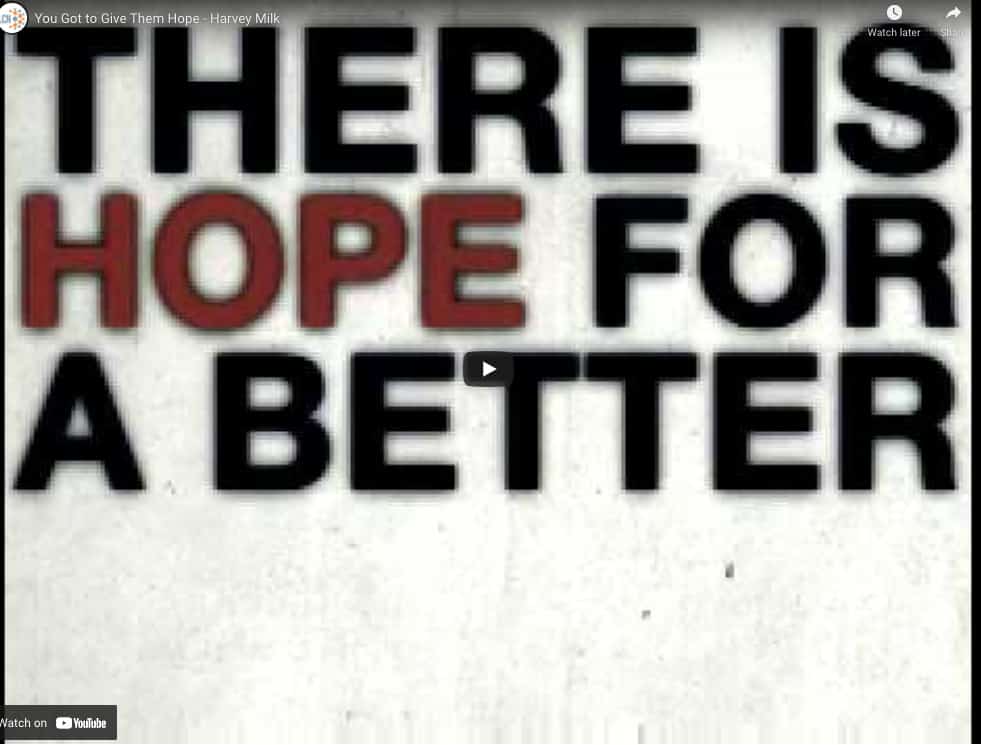
In 1978, in celebration of Gay Freedom Day, Harvey Milk delivered the Hope Speech at San Francisco's City Hall.
Introduction
In 1978, in celebration of Gay Freedom Day at San Francisco’s City Hall, Harvey Milk delivered what has become known as his “Hope Speech” — an excerpt of which we present here as a powerful example of the “Story of Now” component of public narrative. This short video illustrates how Milk, as an openly gay elected leader, fused personal identity, collective purpose, and an urgent call to action to galvanize a community and a movement.
Why This Speech Matters
Milk’s address does more than uplift—it demonstrates the narrative arc taught by the Marshall Ganz-inspired framework: moving from self (his identity and values) to us (the broader LGBTQ+ community and allies) to now (the moment of political opportunity and social transformation). Beginning from his own story, Milk builds solidarity (“We’ve come to create hope”), then zeroes in on the present moment (“You’ve got to give them hope”), making the case that action in this moment matters. This shift from self → us → now is central to public narrative and to how movements win.
How to Use This Resource
1. Watch the Video
Introduce the video on this page. Encourage participants or readers to pay attention to how Milk transitions from talking about what he believes, to how many people share that belief, to what must happen right now.
2. Reflect and Anchor
After viewing, prompt reflection: What personal values or identities drive your work? What shared identity or community are you part of? What urgent moment demands your action now?
3. Connect to Narrative Tools
Use the video as a case study alongside our Public Narrative Models and Examples page, which provides additional frameworks and illustrative cases to deepen your understanding. Explore the article How to Tell Your Story of Self to build the first segment (self) of your narrative. Then use the Story of Self Worksheets to craft your own story of self in a structured way.
4. Link to the Bigger Picture
For facilitator-led trainings, you can integrate this video into the “Introduction to Public Narrative: Participant Guide”. And for a full toolkit of resources, refer to our Guide to Public Narrative Resources which brings together articles, worksheets, case studies and training materials in one place.
Key Themes to Watch For
-
Personal identity and voice: Milk speaks from his lived experience as a gay man and a public servant, anchoring his message in authenticity.
-
Shared identity and community building: He shifts from “I” to “we”, building a sense of collective ownership and purpose (“…you give them hope”).
-
Urgency and action in the moment: The speech emphasizes the present moment—“now is the time… we must…”. Milk underscores you cannot wait when the possibility is at hand.
-
Hope as strategy: The central phrase “You’ve got to give them hope” encapsulates how narrative isn’t just emotion—it is strategic. It gives people something they can believe in and act on.
Workshop / Training Use
This video works exceptionally well in organizing training or change-leadership workshops. Here’s a suggested flow:
-
Play the video for the group and ask participants to note when they sense a shift from personal story (self) to community (us) to urgency/action (now).
-
Break into small groups: assign each group one of the three segments—self, us, now—and ask them to identify examples in the speech and relate to their own context.
-
Re-gather and reflect: What personal value drives you? What shared identity do you represent? What urgent moment do you face?
-
Use follow-up tools: After the session, have participants work through the “Story of Self Worksheets” and then transition into “Story of Us” and “Story of Now” using guidance from our models & examples page.
Linking Story to Change
Milk’s speech reminds us that narrative is not simply storytelling—it is strategic change work. By telling his own story, aligning it with a broader community, and seizing the moment, he modeled how movements win. His message was not only inspirational but actionable. That same structure holds for contemporary organizers and leaders working in deeply diverse contexts.
Closing Reflection
When you reflect on this speech, consider this: what hope are you offering? Who is “them”? And why now? The model of self → us → now shows that the power lies in linking personal conviction to collective identity and to a timely action. By harnessing the tools in our Guide to Public Narrative Resources and practicing with the worksheets, you can turn your own “hope speech” into real change.

